
Designing a Fair Rate Limiter for Bursty Traffic
Explore strategies to build a rate limiter that ensures fairness even during periods of bursty traffic.
Rate limiting is a crucial component in systems that need to control the rate of requests to ensure fair resource allocation and prevent abuse. Designing a rate limiter that remains fair under bursty traffic conditions, where requests can suddenly spike, requires careful consideration of algorithms and architecture.
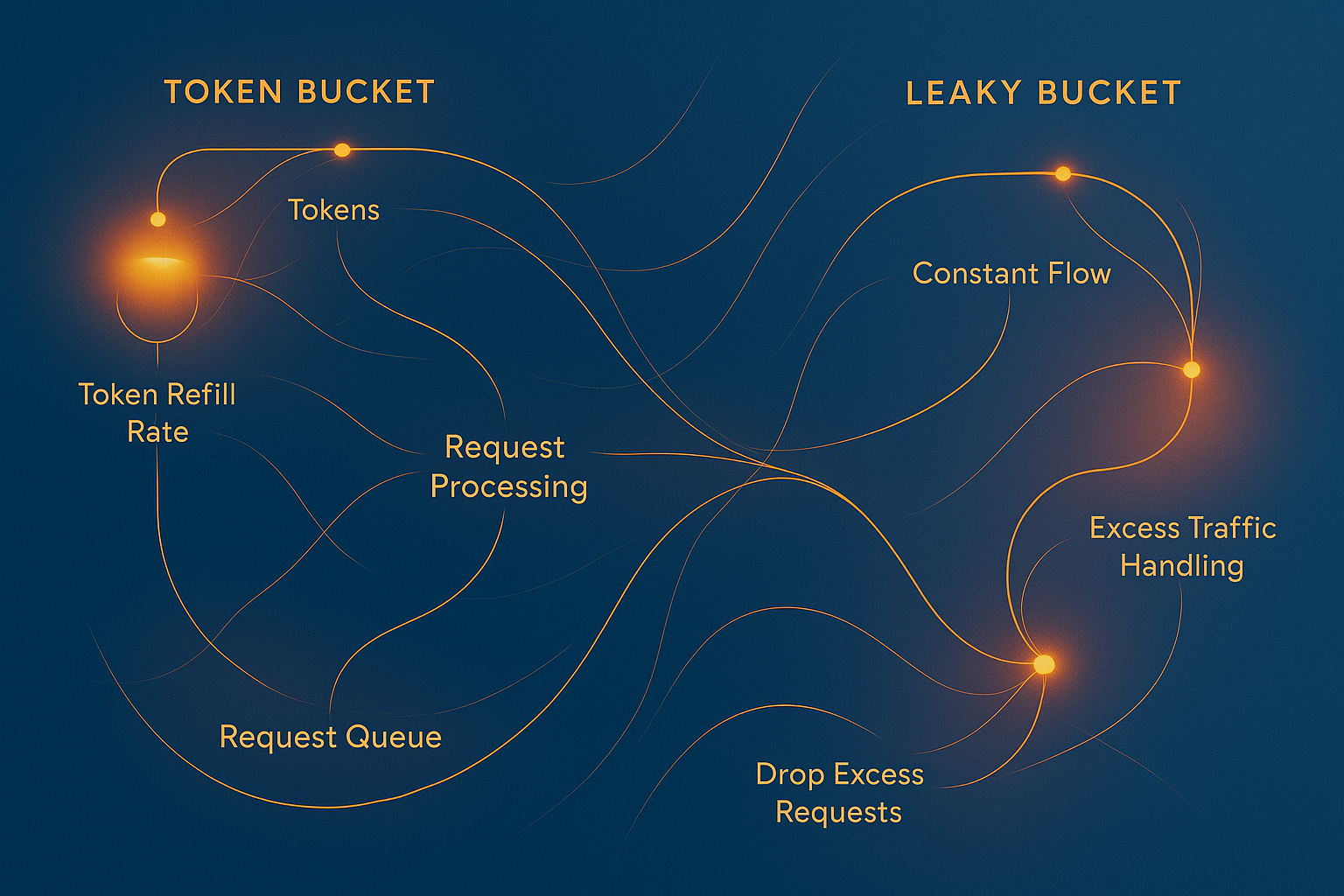
One popular approach is the token bucket algorithm. This algorithm allows for a certain burstiness by filling a bucket with tokens at a steady rate. Each request consumes a token. If the bucket is empty, no more requests can be processed until more tokens are added. This method accommodates surges in traffic while maintaining an average rate over time.
Leaky bucket algorithm is another method, which processes requests at a constant rate, allowing them to 'leak' out of the bucket. This approach smooths out the traffic flow but can be less flexible in handling sudden bursts compared to the token bucket.
Combining these algorithms with a distributed architecture can enhance scalability and reliability. For instance, using a distributed cache like Redis can help maintain the state of tokens across multiple instances, ensuring that the rate limiting is consistent and fair across a distributed system.
Key points
- ·Token bucket allows burstiness.
- ·Leaky bucket smooths traffic flow.
- ·Distributed systems enhance scalability.
- ·Redis can manage token state.
Replies
Sign in to reply.
No replies yet. Be the first to add something useful.