
Spot Instances: Balancing Cost and Interruption Risk
Spot instances offer cost savings for compute resources, but come with the risk of interruptions.
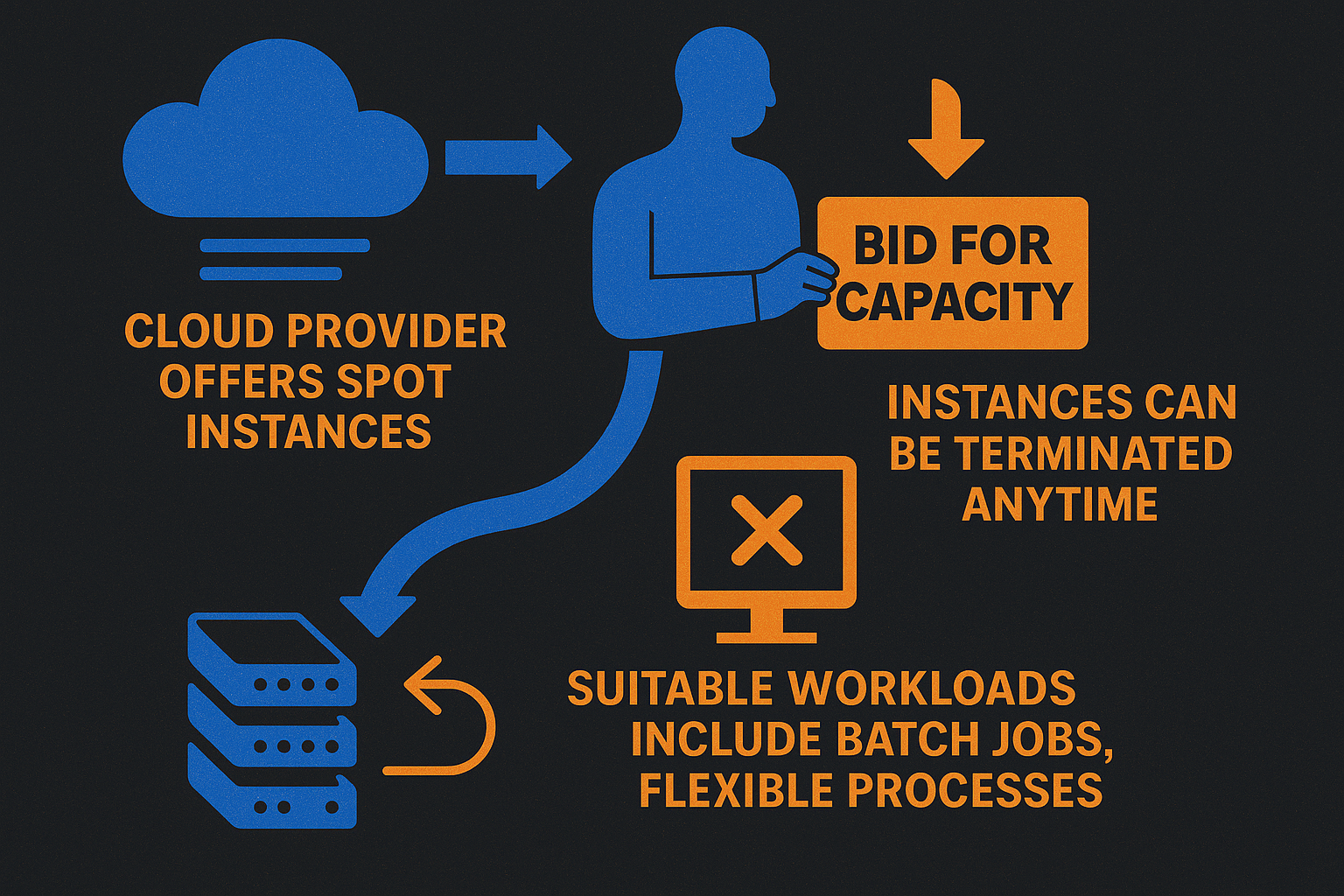
Spot instances are a compelling option for many organizations looking to reduce their cloud computing costs. These instances allow users to bid on unused cloud capacity, which can be significantly cheaper than on-demand pricing. However, the trade-off is that these instances can be terminated by the cloud provider with little notice when the capacity is needed elsewhere.
The primary benefit of spot instances is cost savings. Organizations running non-critical or fault-tolerant workloads, such as batch processing jobs, data analysis tasks, or development environments, can leverage spot instances to reduce expenses. For workloads that can handle interruptions or have flexible completion times, the cost benefits often outweigh the risks.
However, using spot instances requires careful architecture planning. It is essential to design systems that can handle sudden instance terminations. This might involve implementing auto-scaling groups, using checkpoints for long-running processes, or employing a hybrid approach that combines spot and on-demand instances to balance cost and reliability.
Incorporating spot instances effectively requires understanding the specific workload requirements and the potential impact of interruptions. By evaluating these factors, organizations can determine whether the cost savings from spot instances justify the potential operational challenges.
Key points
- ·Spot instances offer cost savings
- ·Risk of instance interruption
- ·Suitable for non-critical workloads
- ·Requires careful architecture planning
Replies
Sign in to reply.
No replies yet. Be the first to add something useful.